Connecting Clinicians for Rare Movement Disorders
Deep brain stimulation (DBS) has proven to be an effective treatment for both pediatric and adult patients with dystonia and other hyperkinetic disorders, and evidence is continually emerging to support its use in an expanding range of monogenic movement conditions. While some disorders, such as TOR1A-related dystonia, are well-established indications for DBS, many rare and ultra-rare movement disorders remain less understood. As a result, individual centers often have limited experience, with decision-making frequently guided by anecdotal observations rather than robust data.
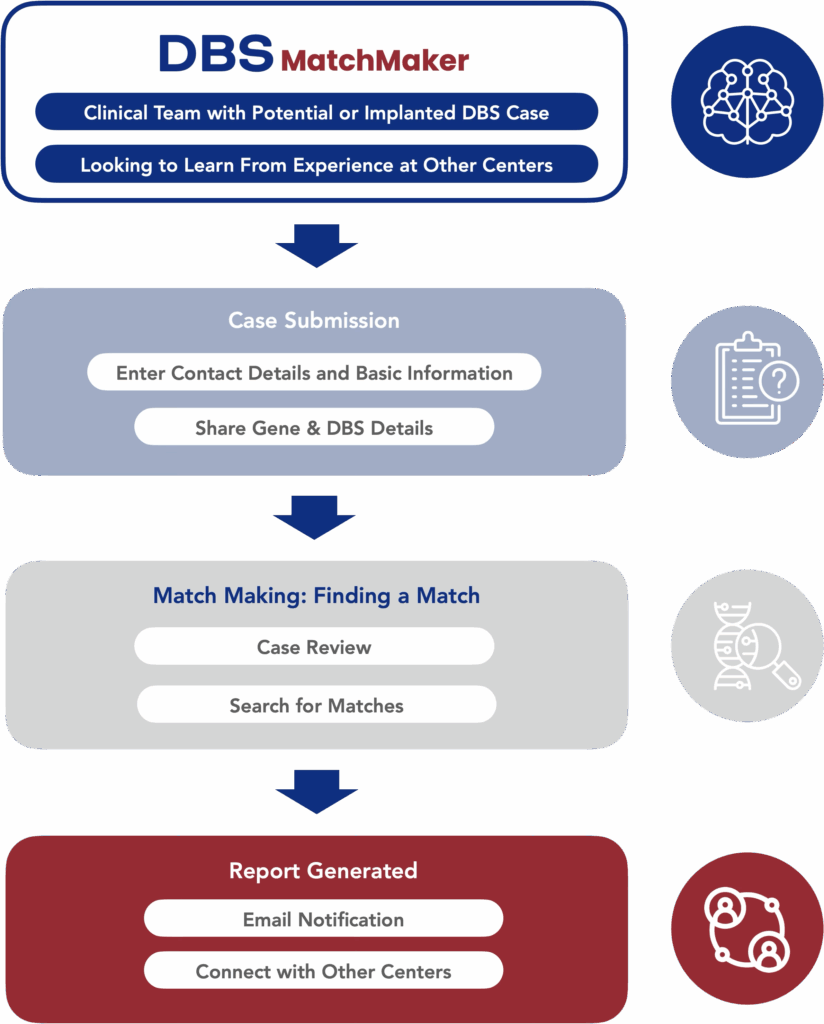
To bridge this gap, DBSMatchMaker was developed to connect clinicians around the world—enabling them to determine the appropriateness of DBS for patients of all ages and to provide guidance on therapy adjustments for those already treated. By facilitating global collaboration, DBSMatchMaker aims to improve patient selection, counseling, treatment strategies, and overall outcomes for individuals with rare movement disorders.
Connecting Clinicians Worldwide to Advance the Care of Individuals Treated with Deep Brain Stimulation (DBS)
Global Collaboration
Connect with clinicians worldwide treating similar conditions with DBS
Knowledge Sharing
Learn from others’ experiences and share your expertise in DBS treatment
Better Patient Care
Improve treatment outcomes through collaborative learning and shared insights
How It Works
Genes in Database
Total genes: 75 | Total cases: 209 | Last updated: 2026-03-04
Collaborating Centers